
The Mistake: Painting Over It and Calling It Fixed
Here's how the argument usually starts. One of you notices a rust spot or a panel that looks a little puffy near the bottom, grabs a can of matching paint, and calls it handled. It's tempting because it is an easy fix on the surface — a few minutes, a few dollars, and the door looks fine again. The problem is that paint doesn't stop rust or swelling, it just hides it for a while. Underneath, moisture is still doing its work, and by the time the paint bubbles again, the damage is usually worse than before.
Why This Climate Makes It Worse Than It Looks
In most of the country, a little surface rust on a garage door is a slow-moving problem. Around Oneco, it isn't. The combination of year-round humidity, salt air if you're anywhere near the coast, and heavy afternoon downpours during storm season means moisture gets into metal and wood faster, and it doesn't fully dry out between rains. Steel doors rust from the inside out when water gets trapped between the outer skin and the insulation. Wood or wood-composite doors swell, warp, and delaminate when they soak up humidity day after day without a real chance to dry.
That's the core of the argument, honestly: one spouse sees a cosmetic spot, the other senses it's connected to something bigger. The second spouse is usually right.
Steel Doors: Rust Rarely Stays on the Surface
Steel garage doors are the most common type here, and they're generally solid in storms when they're in good shape. But once the factory coating is scratched, chipped, or worn at a seam, water gets underneath and starts oxidizing the metal from behind the paint. What looks like a small rust freckle on the surface is often a bigger patch of rust spreading under the skin. Left alone, it weakens the panel itself, which matters a lot here — a door that's supposed to resist wind load in a storm isn't much good if the panel is thin and flaking from rust underneath.
Wood and Composite Doors: Swelling Is the Early Warning
Wood doors and panels show moisture damage differently. Instead of rust, you get swelling — a panel that used to close flush now binds slightly, a seam that looks a bit thicker than it used to, or paint that's cracking along panel edges instead of bubbling in a spot. That swelling is the wood absorbing humidity faster than it can release it. Repeated swelling and drying cycles are what eventually cause warping, cracking, and panels that no longer seal properly against wind-driven rain.
Symptoms Worth Actually Checking, Not Just Glancing At
Before you settle the argument with another coat of paint, walk out and check these:
- Bottom corners and edges — this is where rust and swelling show up first, since it's closest to standing water and splashback
- Panel seams — rust bleeding from a seam usually means trapped moisture, not just surface exposure
- Hardware — rusted hinges, rollers, or track bolts often mean the door has been damp longer than anyone noticed
- Weep holes and drainage gaps at the bottom panel — if these are clogged with debris, water sits against the door instead of draining away
- Soft spots — press gently on a wood panel or push on a steel panel near a rust spot; give means the damage has gone past the surface
What Actually Works, Not Just What Looks Fixed
If it really is just surface-level, here's the right order of operations instead of a quick paint-over:
- Wire-brush or sand the rust spot down to clean metal or solid wood — don't paint over flaking material
- Use a rust converter on steel before priming, so you're not sealing in active rust
- Prime with an exterior metal or wood primer rated for humid climates, then topcoat with exterior paint
- Clear weep holes and drainage channels so water has somewhere to go instead of pooling against the panel
- Keep the bottom seal in good shape — a cracked or flattened seal lets water sit against the door edge every time it rains
This approach costs a bit more time than grabbing a paint can, but it's the difference between a fix that lasts and one that's back in six months — which, for the record, settles most versions of this argument pretty quickly.
When It's Gone Past a Weekend Fix
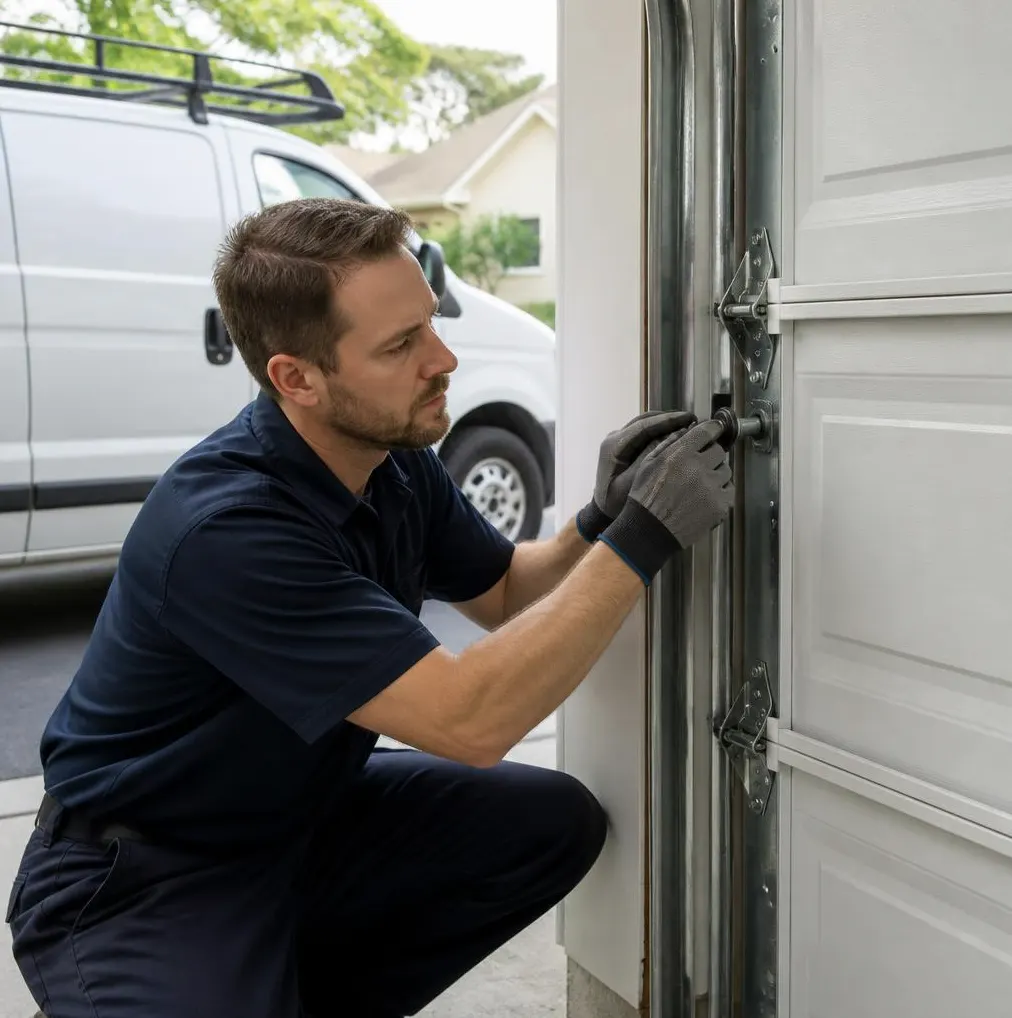
If the rust has eaten through a panel, or a wood panel has visible soft spots, delamination, or won't sit flush no matter what you do, that's past the paint-and-primer stage. At that point, call Oneco Garage Door Service. We handle Garage Door Panel Replacement when one or two sections are compromised but the rest of the door is sound, so you're not paying for a full door over a localized problem. If the rust or swelling has thrown the door off alignment — binding, scraping, or not closing evenly — we'll also check it as part of an Off Track Door Repair visit, since moisture damage and track misalignment often show up together.
If you're in Oneco, Bradenton, Sarasota, Palmetto, Ellenton, Lakewood Ranch, Bayshore Gardens, or Cortez and you're not sure whether what you're looking at is cosmetic or structural, send us a photo or give us a call. We'll tell you straight whether it's a quick repair or something that needs replacing, no upselling, no guesswork — just a fair answer so you two can stop arguing and get back to enjoying your Saturday.